An African safari Tanzania adventure represents the culmination of wildlife travel dreams—a journey into landscapes where nature operates according to ancient rhythms, where predator and prey engage in eternal dance, and where horizons stretch endlessly across golden grasslands. Tanzania has earned its reputation as the continent’s premier safari destination through unmatched wildlife concentrations, pristine wilderness areas, and conservation initiatives that ensure these natural treasures endure for generations to come.
The Tanzanian Safari Advantage
When travelers envision the perfect African safari, Tanzania immediately emerges as the destination that best fulfills those aspirations. This East African nation encompasses nearly one million square kilometers of extraordinarily varied terrain, from Indian Ocean beaches to Africa’s highest peak, from alkaline soda lakes to dense montane forests. Within this diverse geography, Tanzania dedicates approximately 40 percent of its landmass to wildlife conservation—a commitment virtually unparalleled globally.
This conservation dedication produces tangible outcomes that distinguish African safari Tanzania experiences from alternatives elsewhere. The country harbors over 430 species of mammals and more than 1,100 bird species. Wildlife populations reach staggering numbers: approximately 20,000 lions prowling protected areas, over 60,000 elephants traversing ancient migration routes, and countless millions of hoofed mammals creating the biomass that supports complex predator-prey ecosystems.
Beyond impressive statistics, African safari Tanzania delivers something increasingly precious in our modern world—authentic wilderness. Vast territories remain minimally developed, roadless, and wild, allowing visitors to experience nature’s raw power largely unfiltered by excessive human intervention. The adventure and discovery that characterized early African exploration remain palpable, particularly in southern and western parks where genuine remoteness prevails.
Serengeti National Park: The Crown Jewel
The Serengeti stands as the quintessential African safari Tanzania destination, embodying everything that makes wildlife travel in this country extraordinary. This 14,750-square-kilometer protected area forms the core of a 30,000-square-kilometer transboundary ecosystem extending into Kenya’s Masai Mara National Reserve. The Serengeti landscape varies from short-grass plains to woodland savannah, from rocky kopjes to riverine forests, creating habitat mosaics that support remarkable biodiversity.
The Great Migration dominates Serengeti’s international profile, justifiably so given its status as Earth’s most spectacular wildlife phenomenon. Approximately two million animals—predominantly wildebeest but including substantial zebra and gazelle populations—move continuously through the ecosystem following rainfall patterns that stimulate fresh grass growth. This movement creates a roughly circular annual pattern, though exact timing and routes vary based on weather conditions.
The migration calendar follows predictable general patterns while remaining fluid enough to surprise even experienced guides. December through March concentrates herds on southern Serengeti plains where volcanic soils produce nutrient-rich grasses. Late January through February brings the calving explosion when approximately 500,000 wildebeest calves enter the world within weeks, their synchronized births overwhelming predator populations through sheer numbers despite thousands falling to lions, leopards, cheetahs, and hyenas.
April’s arrival signals northward movement as southern grasslands desiccate under the equatorial sun. May and June witness herds traversing the Western Corridor toward permanent water, encountering the Grumeti River where massive Nile crocodiles await opportunities. July through October delivers the migration’s most dramatic phase—the Mara River crossings in northern Serengeti. Here, steep banks and swift currents create deadly obstacles that thousands of desperate animals must overcome to reach northern grazing areas, creating scenes of chaos, courage, and carnage that define African safari Tanzania experiences for many visitors.
Beyond migration movements, the Serengeti sustains resident populations that alone justify its legendary status. Approximately 3,000 lions occupy territories throughout the park, organized into prides demonstrating complex social structures. Male coalitions defend territories against rivals through intimidating displays and occasional violent confrontations. Lionesses coordinate sophisticated cooperative hunts targeting zebras, wildebeest, and other prey. Cubs learn essential survival skills through patient maternal instruction and practice play.
Leopards inhabit suitable habitats throughout the Serengeti, preferring rocky kopjes and riverine woodlands that provide both hunting grounds and secure retreat locations. These solitary, primarily nocturnal cats demonstrate remarkable adaptability and strength, regularly hoisting kills heavier than themselves into trees beyond reach of scavenging lions and hyenas. Cheetahs utilize open plains where their exceptional speed—reaching 110+ kilometers per hour during brief pursuits—provides decisive hunting advantages, though their lightweight build makes them vulnerable to larger predators.
Ngorongoro Crater: Natural Wonder
The Ngorongoro Conservation Area showcases African safari Tanzania’s geological drama alongside its wildlife spectacle. This 8,292-square-kilometer protected area encompasses highlands, forests, grasslands, and the spectacular crater that serves as its centerpiece. The crater formed approximately 2.5 million years ago when a massive volcano—potentially rivaling Kilimanjaro’s current height—experienced catastrophic collapse following major eruptions.
The resulting caldera measures approximately 19 kilometers in diameter with a 260-square-kilometer floor surrounded by walls rising 400-600 meters. This geological amphitheater creates a largely self-contained ecosystem supporting approximately 25,000 large mammals in permanent residence—one of Africa’s highest wildlife density concentrations. Permanent water from highland springs, year-round grazing on fertile volcanic soils, and protective crater walls combine to eliminate migration pressures affecting surrounding areas.
Descending into Ngorongoro Crater ranks among African safari Tanzania’s most memorable experiences. As vehicles navigate steep access roads, the landscape gradually reveals itself—a vast bowl containing grasslands, acacia woodlands, freshwater swamps, and Lake Magadi’s alkaline expanse, all ringed by dramatic crater walls. Morning fog frequently blankets the crater floor before sunrise, creating atmospheric conditions that gradually dissipate as the sun climbs, revealing the wildlife paradise below.
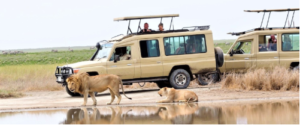
Wildlife viewing quality in Ngorongoro remains exceptional year-round. Lions are virtually guaranteed with several resident prides maintaining crater floor territories across generations. Large elephant bulls sporting impressive tusks regularly descend from forested rim areas to graze lush crater floor grasslands. Buffalo herds, sometimes numbering hundreds, move across open areas. Hippos occupy permanent pools and watercourses while spotted hyenas maintain some of Africa’s highest population densities.
The crater’s black rhinoceros population provides African safari Tanzania visitors with their best opportunities for observing this critically endangered species. Approximately 30 black rhinos inhabit the crater, their relatively protected status and open habitat making sightings more probable than virtually anywhere else in East Africa. Visitors spending full days exploring the crater frequently encounter these magnificent prehistoric-looking browsers grazing openly or resting in sparse shade.
Tarangire National Park: The Elephant Sanctuary
Tarangire National Park demonstrates African safari Tanzania’s seasonal dynamics, transforming from pleasant wet-season habitat to extraordinary dry-season wildlife magnet. This 2,850-square-kilometer park centers on the Tarangire River, which maintains flow year-round through underground springs and highland catchment. As Tanzania’s dry season progresses from June through October and surrounding water sources evaporate, wildlife converges on Tarangire in remarkable concentrations.
The park achieves legendary status for elephant encounters during peak dry months. Herds numbering 200-300 individuals become routine sightings as extended family groups gather along riverbanks and shrinking waterholes. These concentrations provide unparalleled behavioral observation opportunities—complex social hierarchies, tender maternal care, adolescent play behaviors, and dominance displays by mature bulls all unfold before visitors’ eyes.
Tarangire’s landscape features iconic baobab trees scattered across the terrain like ancient monuments. These remarkable plants achieve massive proportions—trunks exceeding 10 meters in diameter—and potentially live over 2,000 years. Baobabs provide critical resources for wildlife: moisture-rich bark consumed by elephants during droughts, calcium-rich fruits eaten by various species, and hollow trunks sheltering countless creatures from bats to birds. The distinctive silhouettes of these giants against African skies create instantly recognizable photographic compositions.
Wildlife diversity extends well beyond elephants. Large buffalo herds, various antelope species, giraffes, and healthy predator populations including lions, leopards, and cheetahs all thrive here. Tarangire also hosts less commonly observed species including fringe-eared oryx, gerenuk that browse standing bipedally, greater and lesser kudu, and occasional African wild dogs—among Africa’s most endangered predators.
Lake Manyara: Compact Excellence
Lake Manyara National Park proves that African safari Tanzania quality depends more on ecological diversity than territorial size. This 330-square-kilometer park occupies a narrow strip between the Rift Valley escarpment and Lake Manyara’s shoreline, compressing remarkable habitat variety into compact space. Elevational gradients create transitions from groundwater forest through acacia woodland to grassland and wetland environments.
The park’s tree-climbing lions generated international interest and continue attracting visitors hoping to witness this unusual behavior. While lions elsewhere occasionally climb trees, Manyara’s population exhibits this habit with sufficient consistency that extended visits often yield sightings of lions lounging in acacia branches. The adaptive significance remains debated among researchers—theories include thermoregulation, insect avoidance, and improved visibility—though the photographic opportunities are undeniable.
Lake Manyara itself undergoes dramatic seasonal transformations. During high water periods, extensive alkaline shallows attract enormous flamingo congregations—sometimes tens of thousands—that filter-feed on algae and microscopic organisms. The massed pink birds against blue water and green escarpment create scenes of extraordinary beauty. With over 400 recorded bird species, the park ranks among Tanzania’s premier ornithological destinations.
Southern Circuit: Untamed Wilderness
African safari Tanzania’s southern parks—Ruaha and Nyerere—remain dramatically undervisited despite offering experiences matching or exceeding famous northern destinations. These remote parks appeal to experienced safari enthusiasts seeking authentic wilderness away from tourist concentrations.
Ruaha National Park spans 20,226 square kilometers of rugged terrain bisected by the Great Ruaha River. Minimal development preserves wilderness character, creating genuine expedition atmospheres. The river attracts massive dry-season wildlife concentrations including thousands of elephants, enormous buffalo herds, and corresponding predator populations. Ruaha hosts over 1,000 lions—more than 10 percent of Tanzania’s total—alongside healthy leopard, cheetah, and African wild dog populations.
Nyerere National Park encompasses 30,893 square kilometers, making it among Africa’s largest protected areas. Beyond traditional game drives, Nyerere permits walking safaris and boat safaris adding dimensions impossible elsewhere. Walking with armed rangers creates heightened sensory awareness while boat safaris along the Rufiji River provide intimate aquatic ecosystem encounters.
Planning Your African Safari Tanzania
Successful safari planning requires understanding seasonal patterns, accommodation options, and operator selection. June-October dry season provides classic conditions with concentrated wildlife and northern Serengeti river crossings, though tourist numbers and prices peak. January-February offers a spectacular southern Serengeti calving season with intense predator activity. November-December provides excellent viewing with moderate conditions, while March-May wet season brings heavy rains but dramatic discounts.
Accommodation spans ultra-luxury lodges with five-star amenities to budget camping. Luxury properties occupy spectacular locations with expert guides and gourmet cuisine. Tented camps offer authentic bush experiences. Mid-range lodges balance comfort and value. Budget camping minimizes costs while maintaining core safari experiences.
Operator selection profoundly impacts satisfaction. Reputable companies employ experienced guides, maintain reliable vehicles, and demonstrate conservation commitments. Research credentials thoroughly, read independent reviews, and ask specific questions about qualifications, safety protocols, and conservation contributions.
Conservation Through Responsible Tourism
African safari Tanzania exists within complex conservation contexts. Human population growth creates pressures fragmenting wildlife habitats and intensifying human-wildlife conflicts. Safari tourism provides crucial economic justification for protected areas through park fees exceeding $60 million annually that fund anti-poaching, ranger salaries, and habitat management.
Responsible travelers maximize positive impacts through conscientious operator selection, respecting wildlife and environments, and supporting conservation initiatives. This approach ensures tourism contributes to rather than undermines long-term conservation objectives.
Conclusion
African safari Tanzania delivers transformative experiences connecting travelers with Earth’s remaining wilderness. From migration river crossings to predator hunts, from elephant family bonds to star-filled African nights, Tanzania creates moments resonating throughout lifetimes. The country’s unparalleled wildlife, vast protected landscapes, and authentic conservation commitment combine creating safari experiences capturing Africa’s soul in its purest form. Your African safari Tanzania journey becomes both personal enrichment and conservation contribution, ensuring these natural treasures endure for future generations.
Key Takeaways
- African safari Tanzania offers unmatched wildlife experiences with approximately 40% of national territory (360,000 square kilometers) dedicated to conservation creating interconnected wilderness networks
- Serengeti ecosystem hosts Earth’s greatest terrestrial migration with two million animals moving continuously through 30,000 square kilometers following seasonal rainfall patterns
- Ngorongoro Crater’s 260-square-kilometer caldera supports 25,000 large mammals at exceptional densities including 30 black rhinoceros providing reliable viewing of critically endangered species
- Tarangire National Park becomes elephant paradise during dry season with herds numbering 200-300 individuals amid spectacular ancient baobab landscapes potentially exceeding 2,000 years old
- Southern circuit parks Ruaha and Nyerere provide remote wilderness with walking safaris, boat safaris, and minimal tourist presence in vast territories exceeding 20,000 square kilometers
- Optimal timing varies: June-October for concentrated viewing and river crossings, January-February for calving season, November-December for moderate conditions, March-May for discounts
- Daily costs range from budget camping $200-300 to mid-range $400-700 to ultra-luxury $1,500+ including accommodation, meals, park fees, and professional guiding
- Experienced guides with comprehensive wildlife knowledge dramatically enhance safari quality through superior tracking, behavioral interpretation, and optimal positioning
- Safari tourism generates over $60 million annually in park fees directly funding anti-poaching operations, conservation management, and community development programs
- Year-round opportunities exist with distinct seasonal advantages from migration phases to weather conditions to reduced pricing and tourist numbers
Frequently Asked Questions
What makes African safari Tanzania better than safaris in Kenya, Botswana, or South Africa?
African safari Tanzania offers several advantages over alternatives. Tanzania protects larger wilderness areas than Kenya with less development and fewer crowds, particularly in southern parks. The Serengeti-Mara ecosystem is shared with Kenya, but Tanzania contains the larger portion plus calving season and greater year-round resident wildlife. Compared to Botswana, Tanzania offers more affordable options across all budget ranges while maintaining similar wilderness quality. South Africa provides excellent infrastructure and malaria-free options but generally lacks the vast wilderness scale and migration spectacles Tanzania delivers. Tanzania’s combination of wildlife density, ecosystem scale, accommodation variety, and authentic wilderness character creates comprehensive safari experiences unmatched elsewhere.
How physically fit do I need to be for African safari Tanzania?
Standard vehicle-based safaris require minimal physical fitness as game viewing occurs from comfortable vehicles with extended seating. Most activities involve short walks between vehicles and accommodations. However, certain activities demand greater fitness: walking safaris require ability to walk 5-10 kilometers over several hours in heat, Ngorongoro Crater descent/ascent involves steep rough roads causing motion, and some lodges feature stairs or uneven paths. Elderly travelers and those with mobility limitations can absolutely enjoy safaris with advance operator notification ensuring appropriate accommodations. Most operators accommodate diverse physical abilities through customized itineraries, though communicating any limitations during booking prevents disappointments.
What wildlife dangers should I be concerned about during African safari Tanzania?
African safari Tanzania is remarkably safe when following guide instructions and common-sense precautions. Animals generally ignore vehicles perceiving them as non-threatening. Actual wildlife attacks on safari tourists are extremely rare. Primary safety rules include: remaining seated in vehicles unless guides specifically permit standing, keeping voices moderate as loud noises startle animals, never exiting vehicles except in designated safe areas, maintaining respectful distances from all wildlife, and following guide instructions immediately without question. Walking between tents and facilities after dark requires provided escorts as nocturnal animals including elephants, buffalo, hippos, and predators may be present. Hippos cause more human fatalities than large predators—never approach water bodies on foot. Guides undergo extensive training in animal behavior and safety protocols ensuring your protection.
Can I combine African safari Tanzania with beach time and where?
African safari Tanzania combines perfectly with beach extensions, particularly in the Zanzibar Archipelago off Tanzania’s coast. Zanzibar offers pristine white-sand beaches, turquoise Indian Ocean waters, historic Stone Town (UNESCO World Heritage Site), and excellent snorkeling/diving in coral reefs. Daily flights connect safari areas with Zanzibar making logistics straightforward. Most visitors structure trips with safari first followed by beach relaxation—the “bush and beach” combination. Pemba Island north of Zanzibar provides more remote beach experiences, while Mafia Island offers exceptional diving including whale shark encounters. The Tanzania mainland coast around Pangani and Saadani also features beautiful beaches with fewer tourists. This combination perfectly balances adventure with relaxation, creating comprehensive Tanzania experiences.
What camera settings work best for African safari Tanzania wildlife photography?
Optimal wildlife photography settings balance multiple factors. Use shutter priority or manual mode for control. Minimum shutter speeds of 1/1000 second freeze most animal movement, increasing to 1/2000+ for running animals or birds in flight. Aperture around f/5.6-f/8 provides adequate depth of field while maintaining fast shutter speeds. ISO should be as low as possible for image quality but raised as necessary for proper exposure—modern cameras handle ISO 1600-3200 well. Use continuous autofocus (AF-C/AI Servo) tracking moving subjects. Shoot in RAW format for maximum post-processing flexibility. Enable continuous shooting mode (burst mode) capturing multiple frames during action. Expose for highlights, particularly in harsh midday light, as recovering shadow detail proves easier than blown highlights. During golden hours around sunrise/sunset, embrace warmer color temperatures. Practice these settings before your safari ensuring comfort with camera controls.
How do I choose between Tanzania’s northern and southern safari circuits?
Northern circuit parks (Serengeti, Ngorongoro, Tarangire, Lake Manyara) offer superior accessibility, diverse accommodation across all budgets, guaranteed year-round wildlife viewing, and concentrated attractions allowing multiple parks in shorter timeframes. Infrastructure is well-developed with excellent roads and facilities. This circuit suits first-time safari visitors, families with children, time-limited travelers, and those prioritizing convenience and guaranteed wildlife encounters. Southern circuit parks (Ruaha, Nyerere) provide authentic remote wilderness with minimal tourist presence, varied activities including walking and boat safaris, larger territories creating expedition atmospheres, and generally lower costs. Access requires more time and operates seasonally June-October. The southern circuit appeals to experienced safari enthusiasts seeking uncrowded wilderness, accepting limited accommodation options, and willing to invest additional travel time for authentic expedition experiences.
What vaccinations and medications do I need for African safari Tanzania?
Yellow fever vaccination is mandatory only for travelers arriving from endemic countries, though obtaining it provides access flexibility. Strongly recommended vaccinations include hepatitis A and B, typhoid, rabies for extensive wildlife/rural exposure, and current routine immunizations (tetanus, diphtheria, measles, polio). Malaria prophylaxis is essential for most safari areas below 1,800 meters—options include doxycycline (daily), atovaquone-proguanil (daily), or mefloquine (weekly) based on individual health profiles and physician recommendations. Consult travel medicine specialists 8-12 weeks before departure allowing time for multi-dose vaccines. Additional health precautions include drinking only bottled/purified water, using high-SPF sunscreen, applying DEET-based insect repellent particularly dawn/dusk, and bringing personal first-aid supplies. Comprehensive travel insurance covering medical evacuation provides important protection though serious incidents rarely occur.
What should I pack for African safari Tanzania and what can I leave home?
Essential items include neutral-colored clothing (khaki, olive, beige) avoiding bright colors and white that attracts insects, lightweight long-sleeved shirts and long pants for sun/insect protection, warm fleece or jacket for cool mornings, wide-brimmed hat, quality sunglasses, comfortable closed-toe shoes, quality binoculars (8×42 or 10×42), camera with telephoto lens (200-400mm range), extra batteries and memory cards, high-SPF sunscreen, DEET insect repellent, personal medications, and copies of important documents. Leave unnecessary items home: excessive clothing (lodges provide laundry), jewelry and valuables (security risks), hair dryers (lodges provide them), drones (require permits, mostly prohibited), formal wear (safari casual prevails), and hard-shell luggage (soft duffels required for small aircraft). Pack in soft-sided bags respecting 15-20 kilogram weight limits for bush flights. Layering proves more effective than bulky items.

